
Secret society · Subterranean folly · Buckinghamshire
The Hellfire Caves
West Wycombe · Buckinghamshire
A hand-cut eighteenth-century underworld beneath West Wycombe Hill, where real history, Hellfire Club scandal and generations of darker stories meet underground.
Photo: ParaMaps · photographed during our visit on 7 September 2026
\nWe went there so you know what to expect
We visited as ordinary paying customers and checked the experience against the information we had published. What we found changed our original assessment from 5★ to 3★. The practical details and verdict below reflect the visit itself – not promotional material.
A fascinating piece of Hellfire history – but better as a detour than a destination
The Hellfire Caves are neither natural caverns nor a modern haunted-house set. They are an extraordinary eighteenth-century landscape feature cut into the chalk beneath West Wycombe Hill. Their chambers were shaped into a deliberately theatrical underground journey and became associated with Sir Francis Dashwood and the notorious society remembered as the Hellfire Club. The history is tangible; the satanic excess belongs largely to rumour, satire and a reputation the club did little to discourage.
Your visit at a glance
ParaMaps visited · 7 September 2026The history begins above ground
Long before the caves acquired devils, ghosts and secret rites, their creation answered practical needs. Dashwood’s theatrical landscape and a community facing failed harvests were part of the same undertaking.
Work beneath the hill
Sir Francis Dashwood commissioned the caves after successive harvest failures brought serious local unemployment and hardship. Digging the chalk provided paid work, while the excavated material helped supply a new road between West Wycombe and High Wycombe.
Relief work and spectacle were not competing explanations. The project could serve the village, reshape the estate and create an extraordinary private setting at the same time.A designed underworld
The passages run for roughly a quarter of a mile beneath the hill, opening into chambers that include the Banqueting Hall. A subterranean crossing named the River Styx leads towards the Inner Temple at the deepest point.
The language is drawn from the classical underworld. Visitors are following a deliberately staged journey rather than wandering through naturally formed caves.Part of Dashwood’s landscape
The Gothic flint entrance and the caves form part of Dashwood’s wider eighteenth-century scheme across West Wycombe Park and Hill. Historic England dates the work to 1750 – 52 and lists the entrance at Grade II*.
Above the Inner Temple stand St Lawrence’s Church and the Dashwood Mausoleum, binding the underground route into one carefully composed landscape of religion, death and display.What happened in the Inner Temple?
Dashwood’s circle used several names, including the Friars of St Francis of Wycombe. Its members were wealthy, politically connected men who met for elaborate dinners, drinking, satire and irreverent performance. Meetings associated with the West Wycombe caves helped turn the group into the “Hellfire Club” of popular memory.
The club’s secrecy and deliberate mock-religious theatre invited darker accusations: black masses, devil worship, occult ceremonies and every variety of sexual scandal. Some gatherings were undoubtedly designed to shock conventional society, but the most sensational accounts were shaped by hostile gossip, political enemies and later retellings. Surviving evidence does not allow a reliable inventory of rituals in the Inner Temple.
That uncertainty is the heart of the place. Dashwood created rooms that looked ready for initiation and myth, then gathered people powerful enough to attract rumours. The caves preserve the stage; history has lost much of the script.
A betrayed bride and a heart that disappeared
The caves’ best-known hauntings attach human tragedy to an already theatrical setting. Both are preserved as local legends; neither should be mistaken for a securely documented death or apparition.
Suki, the White Lady
Suki is said to have been a young barmaid deceived by men who sent a false message promising an elopement. The cruel prank ended with a thrown stone striking her, and her white figure is now said to move through the passages searching for the future she expected to find there.
Paul Whitehead’s heart
Club steward Paul Whitehead requested that his heart be placed in an urn at the Dashwood Mausoleum. The relic later disappeared. Tradition gives his ghost a wonderfully specific unfinished purpose: wandering the caves and hill in search of his missing heart.
Shadows and voices
Visitors and paranormal investigators have reported footsteps, voices, moving shadows and sudden changes in atmosphere. During our own daytime visit, though, we didn’t find the caves particularly spooky. The setting could feel very different during one of the venue’s night-time paranormal events.
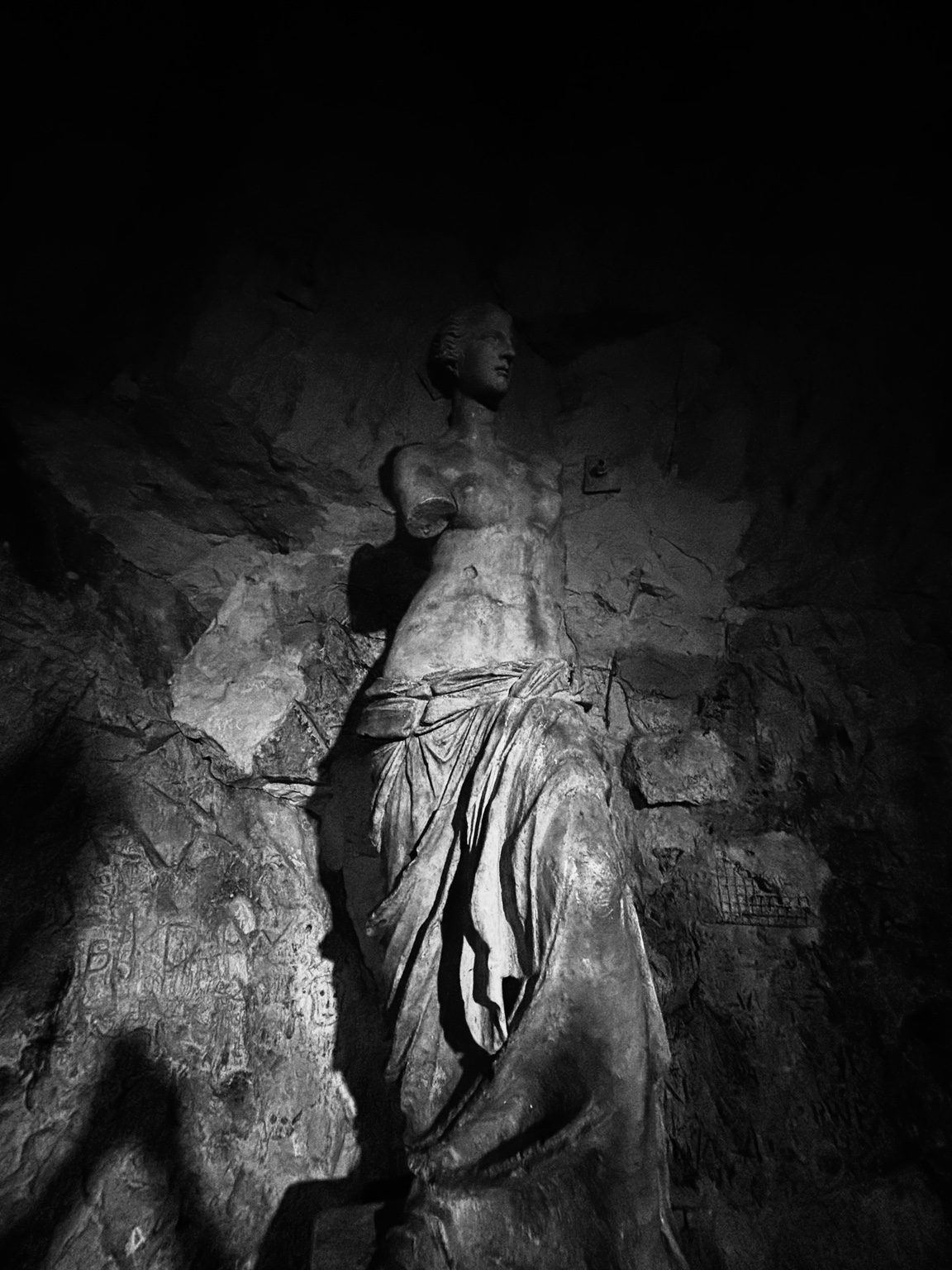
Atmospheric caves with a slightly tired edge
The underground setting is easily the strongest part of the experience. The temperature drops, passages narrow and ceilings become surprisingly low in places. There is enough darkness to retain the cave atmosphere without turning the standard daytime visit into a horror attraction.
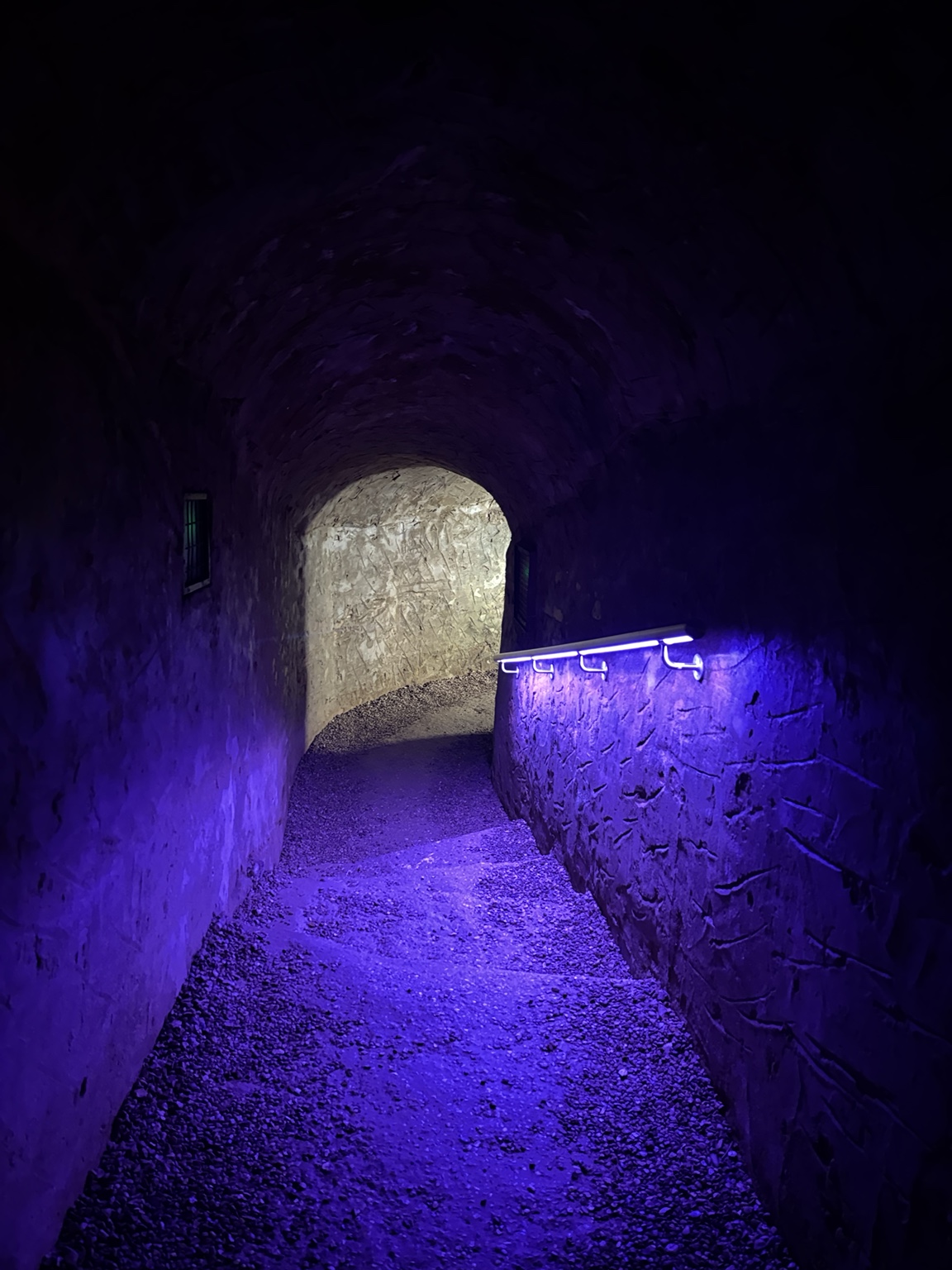
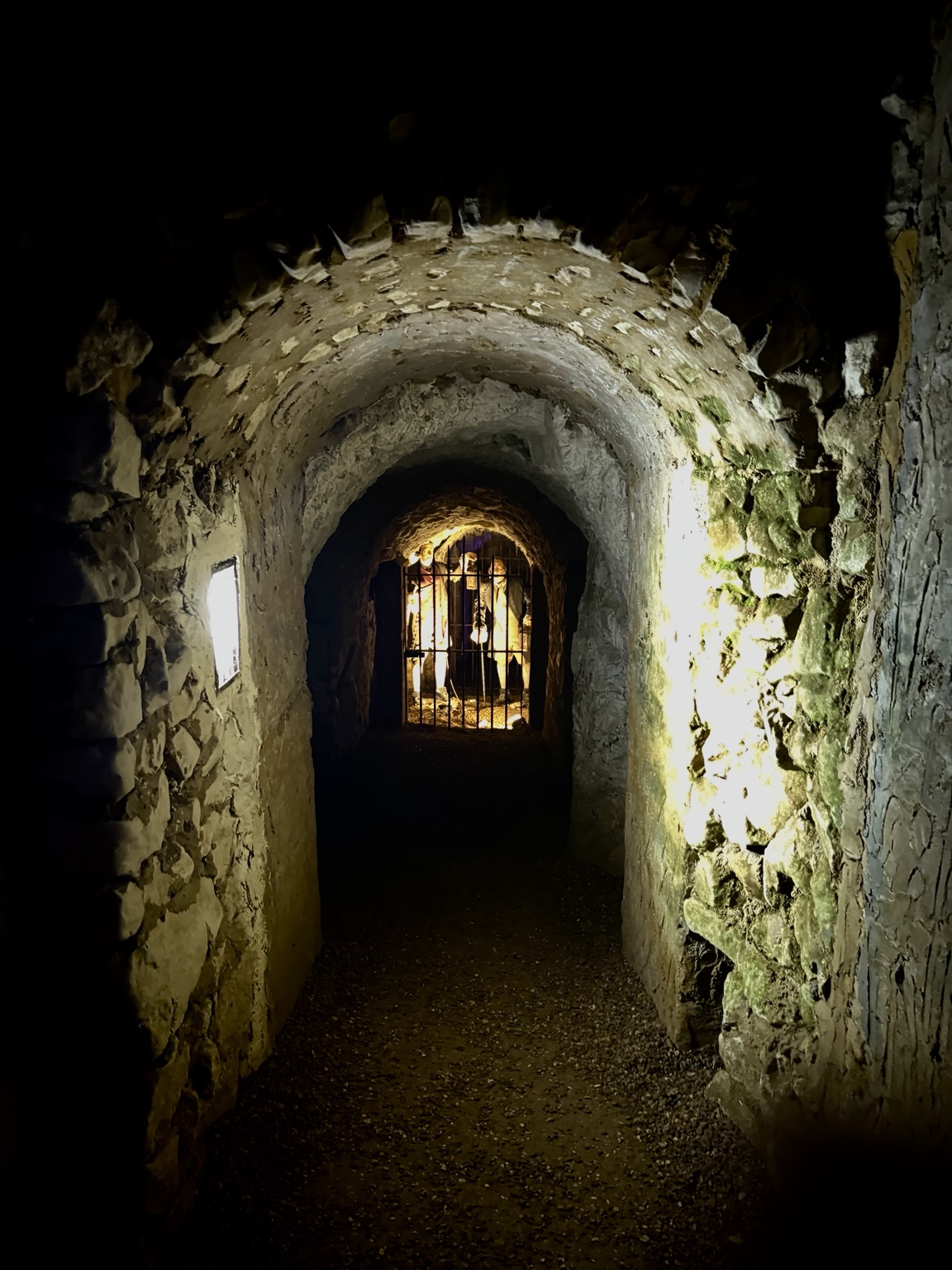
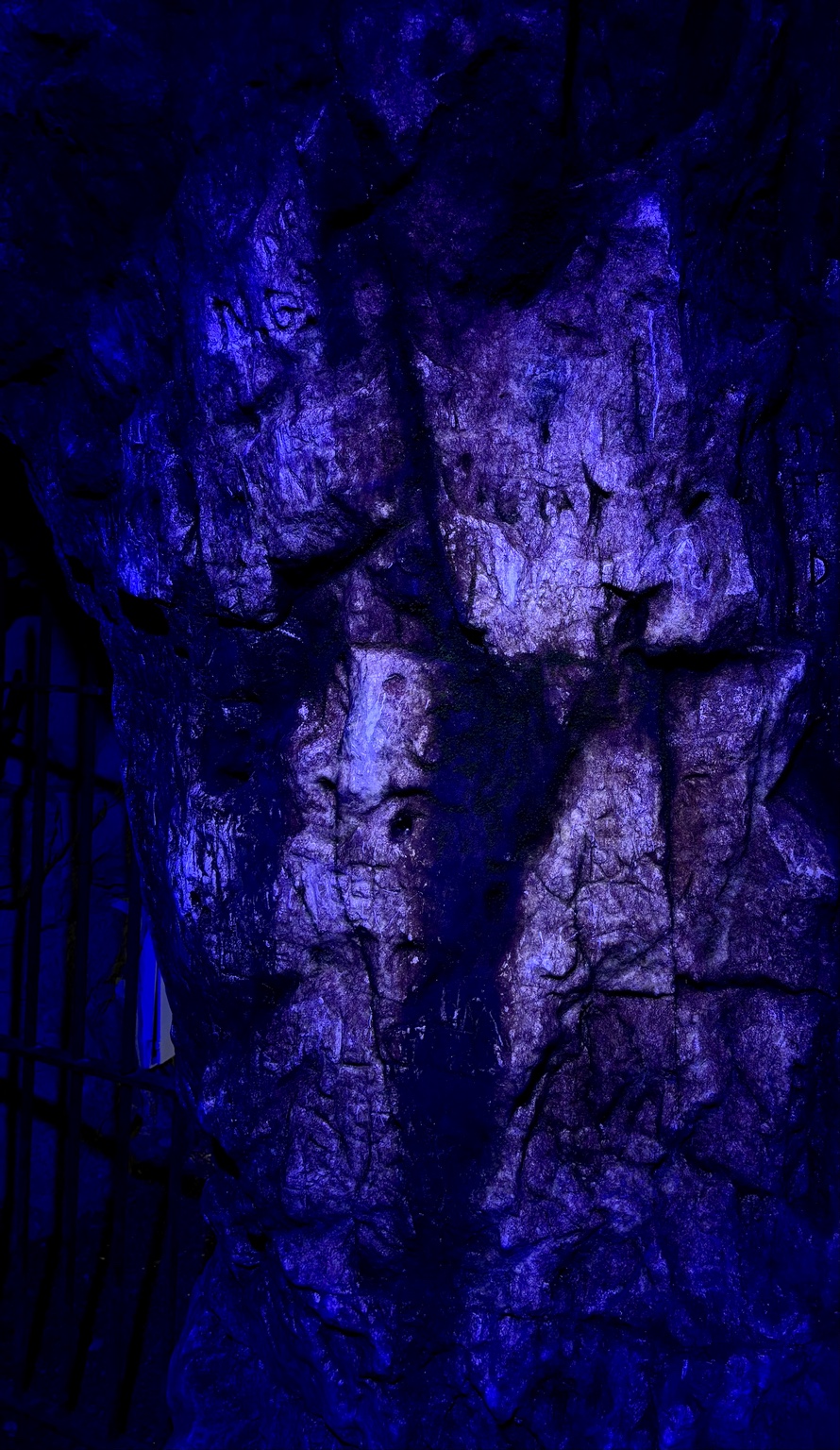
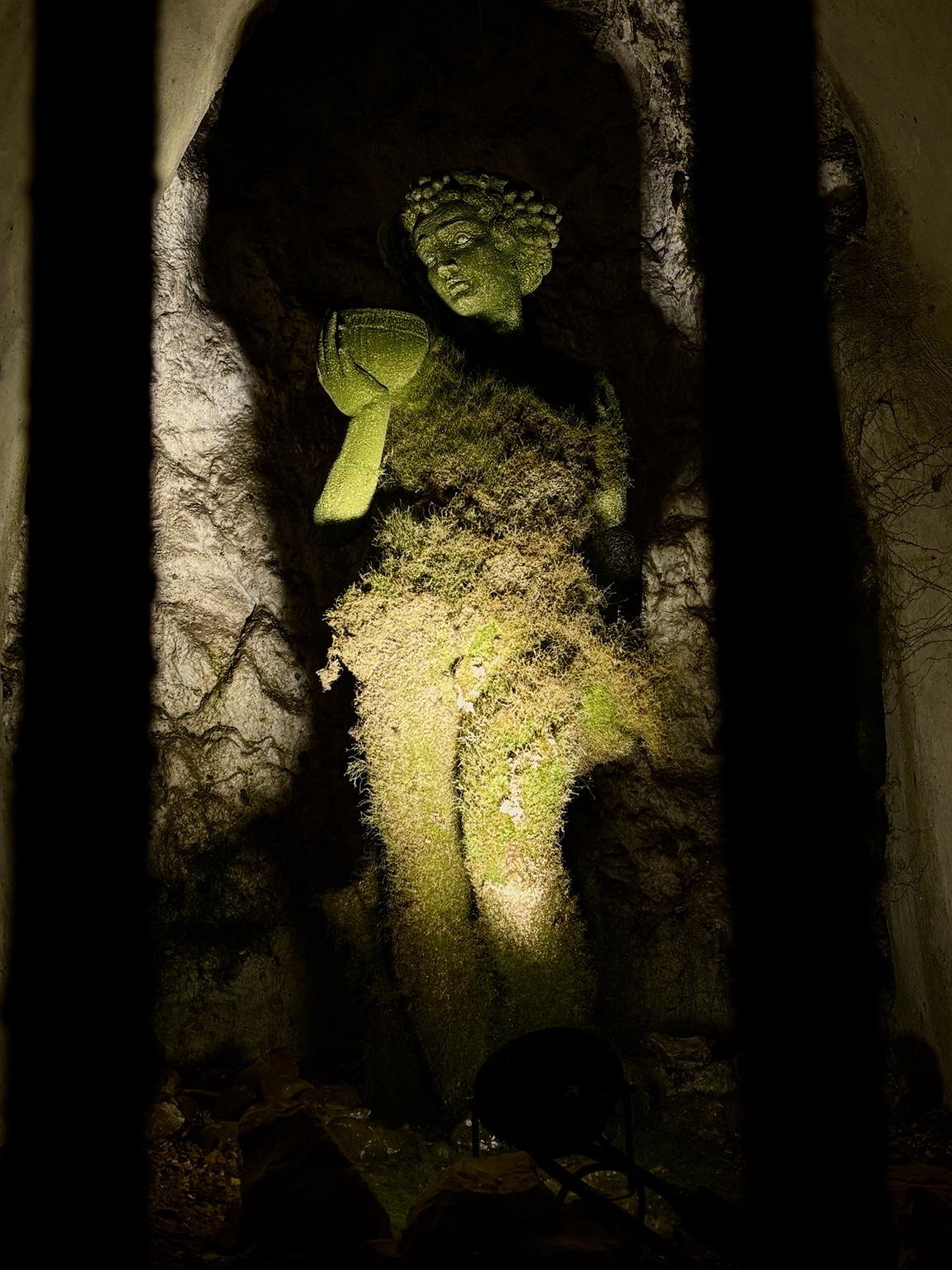
All photographs in this section were taken by ParaMaps during our visit on 7 September 2026.
\nThe ParaMaps visit
We visited on 7 September 2026 and came away pleased we had stopped – but also with a much clearer idea of where the caves sit on the ParaScore scale.
The caves deliver the atmosphere
The hand-cut tunnels, chambers, cooler air and changing ceiling heights give the place real character. Historical information along the route helps connect what you are seeing with Dashwood and the Hellfire Club rather than leaving the caves to rely entirely on legend.
Some of it feels tired
The recreated figures and mannequins add context, but some felt a little dated and unloved. Modern names and faces carved into the cave walls are also very noticeable. They are not the venue’s fault, but they do take some of the magic out of the historic setting.
It is over quickly
We completed the cave route in roughly 20 minutes without rushing. You could linger over every information panel, but for most visitors we think 30 minutes to an hour is a much more realistic allowance than treating this as a substantial half-day attraction.
Arrival and parking
The attraction is on Church Lane in West Wycombe, but we found the approach poorly signposted. Parking immediately beside the caves is extremely limited – roughly four or five spaces when we visited – although we did manage to get one.
Larger car park: Chorley Road, HP14 3AP
Our advice: use navigation and don’t rely on attraction signage
Inside the caves
The route is lit, but there are darker stretches and the ceilings become very low in places. It is noticeably cooler underground, while the floors and passages can be uneven. None of that bothered us – frankly, that is part of the fun of visiting a cave.
The hill is another matter
We attempted the walk up West Wycombe Hill afterwards and made it roughly halfway. It is considerably steeper than a casual attraction add-on might suggest, with uneven ground that becomes particularly noticeable on the way back down.
Is it worth it?
For us, yes – in the right circumstances. The caves added around 20 minutes to our journey and made an unusual, memorable stop. We are pleased we went, but we would not make a long journey specifically to visit them and would not personally return just for the standard cave experience.
Turn the detour into a bigger mystery trip
If you are travelling further through the area, there are stronger ParaMaps experiences that can turn Hellfire Caves into one stop on a larger day out.
Oxford Castle & Prison
Climb the Saxon tower, descend into the crypt and trace centuries of imprisonment, execution and reported haunting inside Oxford’s historic castle quarter.
Explore Oxford Castle & Prison →Tower of London
Meet the ravens, prisoners and royal ghosts of England’s most famous fortress, where documented violence and enduring apparition stories occupy the same walls.
Explore the Tower of London →Take the detour. Just know what you’re getting.
The Hellfire Caves have a brilliant story, an atmospheric underground setting and enough genuine history to make them well worth seeing. But reputation makes them sound like a much bigger experience than the standard daytime visit actually is. Catch them on your route, enjoy the strange descent beneath West Wycombe Hill and keep exploring afterwards. That is exactly what a 3★ ParaMaps location is for.